

Are you asking for help?
Why I struggle to reply with a yes, I am asking for help.


The migraine
About a month ago, just as I was scheduled to do a Substack LIVE, I had a really bad migraine attack and was bedridden for about 48 hours. I’ve had migraines since my teenage years, and over the decades I’ve found ways to prevent them at times and to deal with the symptoms more or less successfully at others. Often, the only thing to do is to lie in bed and wait for it to pass.
This particular migraine felt connected to a very stiff neck, and I had the sense that a neck rub could help. But I live alone, and I was too sick to get myself to a massage specialist. And yet, I have a lovely neighbour who has become a friend over the ten months we’ve known each other. We’ve supported each other through some tough situations, and on the first day of my migraine she asked if I needed anything. I responded, no, no, I will be OK. Except I wasn’t going to be OK.
It took me another 24 hours of feeling utterly miserable, and rather sorry for myself, before I got over some sort of stubborn sense of pride and self-sufficiency and sent her a message saying: I need help. Could you come and rub my neck? I feel like it might be the source of my misery. She came over and gave a wonderful neck and shoulder rub that made me feel much better, and over the course of the next eight hours, my migraine was finally gone.
A pattern
You see, I am not very good at asking for help. I really have to hit rock bottom to believe I deserve help. I am much better at offering it. I think this is partly my co-dependent nature. I come from a line of women who take care of themselves, don’t ask for help, and help others even when that help is not wanted or needed. There is also the belief that I need to help myself—that no one else will help me, not even God. I was brought up by atheist parents who instilled in me the idea that I can only really rely on myself, and throughout my life I have taken great pride in being independent and self-sufficient. In my books, only serious, life-threatening situations merit asking for help, otherwise I better do my best to take care of it myself.
The maze
As part of a leadership programme I’ve been attending since April last year, I’ve been learning to stretch myself around asking for help. During the first retreat, we did a group exercise where our eyes were tied and we were put inside a maze, where all we could do was hold on to a rope and we were asked to find our way out. We had to find our way out while our eyes were closed, and we were told we were only allowed to speak if we were asking for help.
I was finding my way up and down the maze, holding on to the rope, as per the instructions and not getting anywhere. I would raise my hand every now and again, trying to get the attention of the facilitators. Each time, someone would come to me and ask, Are you asking for help? And I would reply, no, no, I just want to ask a question. The response was always the same: You can’t speak unless you’re asking for help.
So I spent probably 45 minutes walking around inside this maze, raising my hand over and over again, being asked Are you asking for help? and replying each time, no, no, I just have a question. When the exercise ended, out of the fourteen participants, I was one of the four or five who stayed inside the maze. The way out was simply to say, I need help/I am asking for help. Once you said that, you were allowed to exit the maze.
What I learned was that it is genuinely difficult for me to say those words: I am asking for help. I need your help.

Practicing
One of my “stretches” this year, then, has been to practice exactly that.
Since that first retreat, I’ve been practicing asking for help in everyday life. Living in Lisbon, single, in a country where I have a limited number of friends and no family who would be “expected” to help me, has made this particularly challenging. One example was when a friend offered me a heavy piece of electrical equipment that could improve my living conditions, with the small complication that I needed to transport it from her place to mine, both apartments on the third floor, with no elevator. It took me over a month to gather the courage to ask in my biodanza group whether any of the men might help me move it. When I finally asked, not one, not two, but three men offered help. I was spoiled for choice.
A few weeks later, I asked another friend to help me mount some paintings and photo frames on the walls of my apartment. It was his wife who told me he would be delighted to do it. I was skeptical, but he really was happy to help. When we talked about my difficulty asking for help, he said something that stopped me in my tracks: Asking for help makes people feel special. Honestly. After all the work I’ve done trying to understand human beings, this turned out to be one of my bigger blind spots.
Control
Because when people ask, Do you need help? my instinct is to reply, No no, I’ll be fine, don’t worry. What I am actually hoping is that they will somehow read my mind and do exactly what is needed. But let’s be realistic, how often does that actually happen?
There is also the fear of rejection. If you don’t ask, you can’t be turned down. But by not asking, you also make it impossible to receive help1. People are not mind-readers.
Another reason I struggle with asking for help is that I often have a clear idea of what help should look like. I have asked for help in the past and had people do things in ways that created more work for me, not less. Many women (maybe also men) will recognise this experience when it comes to asking one’s spouse to help with house chores. And while that frustration is real, I also recognise that my need to control the outcome plays a role here. Being a control freak does not make asking for help any easier.
One of the things I’ve decided to practice in 2026 is letting go of control and allowing others to take care of me.
Getting sick on New Year’s Eve and staying ill for almost a week while visiting my family turned out to be an effective training ground for that. Apart from getting myself to the bathroom, I was unable to do much for several days. I accepted help and let go of expectations.
Another exercise in letting go of control came when my bag went missing on my way to Slovenia and only appeared two weeks later, at the end of my stay. After several failed attempts to get Lisbon airport to send it to me, I stopped fighting it. I decided the bag would turn up when it did, and if it didn’t, it wouldn’t be the end of the world. In the end, it arrived. I also realised I hadn’t truly missed much from it, apart from the presents for my family, which all survived the journey, including salted cod, a story for another post.
Being held
One more practice in asking for help and letting go of control came at the end of December, when I tried watsu2. It is a form of hydrotherapy where you float in warm water while being held and moved by a practitioner. It was recommended to me by my coaching certification instructor, who is an experienced somatic coach and who has known me for over a year and said, very simply, that it was time I let someone hold me and take care of me, with no strings attached.
During the one-hour session, the watsu practitioner supports you completely. You are fitted with floaters around your knees and under your neck and head, so your body can float without effort. The practitioner holds you and moves you gently through the water. You don’t have to do anything. You don’t have to hold yourself up, anticipate what comes next, or adjust your body to make things easier for the other person. You are carried.
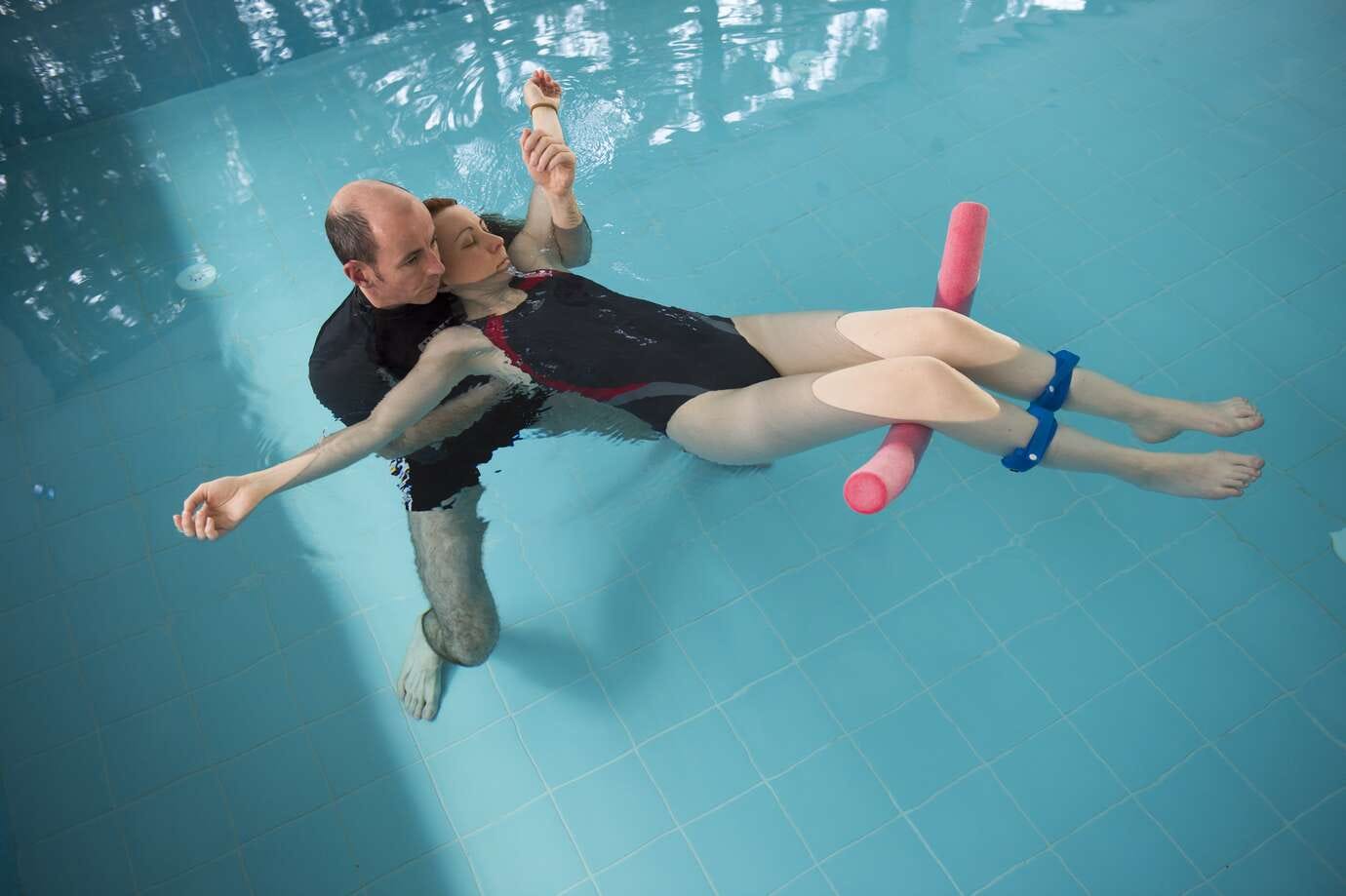
I realised how rare that experience is for me. I have rarely felt that level of care and attention, perhaps not since infancy. Some people describe watsu as floating in the uterus. I don’t know about that, but I do know that something in me softened. I felt safe, supported, and able to receive without needing to manage the experience.
All I can say is that it felt deeply nourishing, and I would happily allow myself to be held that way again.
So what am I learning about my difficulty with asking for help?
That it is not a character flaw, but a learned pattern, one I am learning to recognise as it shows up. In my leadership programme, we’re encouraged to revise statements like “I’m bad at this” to “Until now, I’ve been bad at this.” This reframing shifts the issue away from something fixed about who we are and towards something learned and therefore changeable. In that spirit, I recognise that I used to be bad at asking for help, and I am learning to get better at it.
How about you?
Are you better at giving help than receiving it?
Do you expect people to read your mind instead of telling them what you need?
Do you believe you deserve help?
I would love to hear from you in the comments.
In a recent post, I wrote about how perfectionism and procrastination can be a way of avoiding this kind of disappointment. By never fully engaging in a task, we self-sabotage: the result is never perfect because we never truly tried, but that also gives us an excuse for the outcome. Similarly, if you don’t ask for help, people can’t disappoint you by saying no—but they also can’t surprise you by saying yes. Read more about it this post.
https://en.wikipedia.org/wiki/Watsu
I'm like you, terrible at asking for help. I feel bad for troubling people, I don't want to be a nuisance or a pain. Part of this is related to me also being bad at offering help - if that makes me a bad person, so be it. I don't mind helping for minor things, but if someone asks me to do something that I feel is unnecessary or not the best use of my time, I resent that. So to be fair and consistent, I am reluctant to ask for help in most cases. Sometimes people call me stubborn, my in-laws tell me off, but I suppose if I desperately needed help, I would ask (like if it was something related to my daughter, then definitely).
I'm the same -- asking for help is hard. But in some ways, it's rational. As you mentioned, when we ask for help, sometimes people's response gives us more work than we had before asking for help.
For example, I walked into a hardware store looking to buy a nut. The "helpful" gentleman not only found me the correct size but screwed it onto the bolt on my bike with a wrench -- without asking me if I wanted him to. Only later did I realize he screwed it on too tight, and now my bike doesn't function properly.
So in these instances (which are quite common), it makes sense _not_ to ask for help.
We need to normalize asking permission to execute whatever "helpful" idea one has rather than seeing the recipient as having control issues.